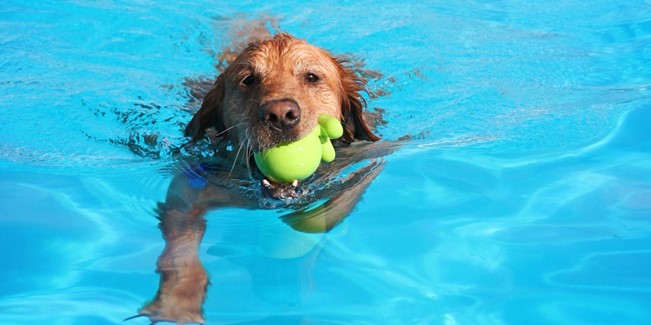
You might be surprised to hear that not all dogs can swim. Even if your dog likes the water, veterinarians say it’s essential to make sure your companion is safe when you take them swimming. Following these guidelines will increase your dog’s safety, keeping both of you happy on your next outdoor adventure.
Do:
Invest in a life vest.
Even dogs adept at swimming can get tired in the water. Canine life jackets and vests come in a variety of bright colors and styles and include reflective stripes and badges. Choose a life jacket if you’re going boating. It will cover more of your dog’s body, increasing buoyancy and visibility. For swimming pools, try a lighter life vest with less material. Remember that just like human life jackets and vests, they need to fit correctly to work.
All life vests come equipped with a handle on the back. It is perfect for teaching your dog how to swim or getting used to the water. It also allows for easy retrieval of your pup. Make sure it has a D-ring to attach a leash.
Bathe your dog afterward.
Give your dog a good rinse to get rid of any debris or chlorine. Lakes and rivers can have high bacteria levels, and chlorine and salt can dry on your dog’s skin, causing irritation. Moisture can linger longer on dogs with furrier coats. Make sure to dry your dog thoroughly to keep their skin and fur’s protective barriers intact. Ask your veterinarian to recommend a drying agent for their ears to prevent infection.
Don’t:
Assume your dog can swim.
Some body shapes prohibit dogs from being good swimmers. Retrievers and Labradors are excellent water dogs since they have balanced bodies for swimming and floating. Round-bodied, short-legged dogs, like French bulldogs, have difficulty taking strokes and staying afloat. Pugs and dogs that have difficulty breathing should not be in the water.
Go into the water with them. Make sure your pup is comfortable and safe by holding on to the vest and guiding them as they attempt to swim. Ask your veterinarian for advice about your breed before taking your dog swimming.
Let your dog drink the water.
Blue-green algae growing in water is hazardous to dogs. It can bloom on lakes, rivers, and streams, as well as in swimming pools. Drinking water that contains algae will irritate the eyes, ears, throat, and skin. Other symptoms include upset stomachs, diarrhea, and vomiting. In more severe cases, it can cause liver damage and seizures.
Schedule a check-up for your pup with O’Fallon Veterinary Medical Center in St. Charles County, MO. Their team of veterinarians offers a range of services for your pet, including wellness exams, dental care, vaccinations, spaying and neutering, boarding, and emergency care. Call (636) 272-3100 to make an appointment and visit their website to learn more about their staff and veterinary services.
Published: https://connect2local.com/l/173049/c/878274/the-do-s—don-ts-for-taking-your-dog-swimming
 Kathleen Walder Portfolio